
€189 or 2 monthly payments of €99.50
Ayurvedic Massage Training "Energy Abhyanga"
This Hindu massage brings a profound sense of well-being and renewed energy. It leaves you with the feeling of light legs and a reshaped body. This technique helps you reconnect with your body and acts as a true antidepressant. Massage duration: approx. 90 minutes. Review all the modules and contact us by email to obtain your training certificate.
Buy now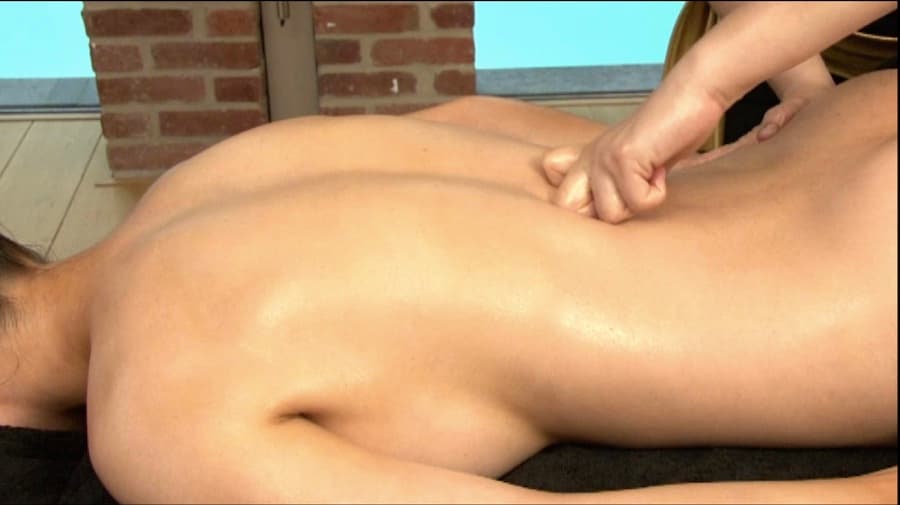
Learn more
Energy Abhyanga massage originates from Ayurveda. Ayurveda in Devanagari script is the combination of the words Ayur, which means life, and Veda, which means science and knowledge. It is a wisdom and technique originating in India, practiced in Asia as "non-conventional medicine". In Europe, Ayurvedic massages have become widespread as a wellness practice. Ayurveda draws its sources from the Vedas, that is to say, from the collection of sacred texts of ancient India. Its principles are essentially derived from the use of natural plants and the observation of the human body. The earliest literature on Ayurveda appeared in India during the Vedic period, of which the Sushruta Samhita and the Charaka Samhita are the most important works. Ayurvedic practitioners have also developed a number of herbal preparations and procedures such as enemas, in addition to manual techniques to relieve various pains and ailments. In Europe, Ayurveda is an alternative technique not recognized by the state and patents concerning herbal preparations are still being challenged by official institutions, such as Afssaps, the French agency for the safety of health products, because their effectiveness has not been scientifically proven. Ayurveda is called nityam and apurusheyam, literally "eternal technique". It has retained its principles in broad outline, despite the foreign influences that India has undergone, such as Greek, Chinese, Persian or Tibetan influence. This knowledge fell into disuse for several centuries, following the Muslim invasions of northern India from the 8th century onwards. Ayurveda is making a strong comeback in India, in parallel with the Renaissance in Europe. With the various European colonizations, practitioners were subjected to numerous pressures. It was notably banned by the English, who considered it strange and immodest; it was very frowned upon to touch an individual's body except for doctors. It was not until India's independence in 1947 and the influence of Mahatma Gandhi that Ayurveda was once again considered a leading science. Today, Ayurveda seems to generate more interest for its approach to well-being than for its "ancient medical" aspect. It is said that in India there are countless techniques depending on the region and how the tradition has been able to survive orally during the different periods of invasions. It is important to understand that Ayurveda includes a great many massage techniques, extremely varied in their practice and effects in order to be able to satisfy all the needs of Ayurvedic doctors. However, it can generally be said that Ayurvedic massage techniques generally provide a lot of energy, combat fatigue, insomnia and depression. Ayurvedic massages have great relaxing properties and meet the current needs of a large part of the population to cope with the stress and pressure of daily life. Ayurvedic massage is ideal for anyone seeking serenity and inner peace. In India, they say that you rediscover the joy of living by experiencing Ayurvedic massage; they also say, "Treat your body well so that your soul wants to stay in it." Although Ayurvedic massages have existed for 5000 years, Ayurveda as we know it is a method reinvented by Swami Yogi Anand Bharati, a famous contemporary Ayurvedic doctor, who considers it both a therapy and a vehicle to spread the riches of Ayurvedic science and philosophy throughout the world. In 1982, he created APMA, the Association for the Promotion of Ayurvedic Massage in the 14th arrondissement of Paris, in order to spread this knowledge and its philosophy in France and around the world. Ayurveda offers lasting well-being in life, both individual and familial and social. It places man back in his dimension, both physical and spiritual. Ayurveda believes in the existence of five natural elements, namely; earth, water, fire, air and spirit, forming the universe and the human body is part of it. Ayurveda believes in the existence of seven elements present in the human body and that it is possible to act upon them, namely; blood, flesh, fat, bone, marrow, chyle and sperm. Ayurveda believes in the balance of three Doshas, Vata which symbolizes air, Pitta which symbolizes fire and Kapha which symbolizes earth and water; this theory is paramount in India. These elements are present to varying degrees in each individual, particularly because they also relate to their anatomical characteristics, such as dark or light hair, long or thick fingers, thin or fat body, etc. The dominant Dosha or Doshas in an individual determine each person's tendencies or weaknesses and allows, through observation, for making an appropriate choice. When these three Doshas are harmonized, we speak of Tridoshic balance. This balance keeps the body healthy; it is achieved through massages, but also through diet, physical exercise, the consumption of Ayurvedic herbal teas, enemas, and meditation. VATA means to move in Sanskrit, it is the expression of movement. It is responsible for all bodily movements, whether physical or mental. Its seat is located in the colon and it is composed of air and ether whose major qualities are dryness, lightness, roughness, light or cold tones and everything that is dispersed. To rebalance this dosha, it is necessary to keep your body warm from the outside, but also from the inside by consuming warm foods... in fact, to eliminate everything that is cold, including raw foods and drinks. It's important to get plenty of sleep, avoid stimulants, and establish a calming daily routine for your body. Absorb plenty of oil, either orally or transdermally through massage. Finally, practice sweating techniques, such as using a sauna. Ayurveda offers lasting well-being in life, both individual and familial and social. It places man back in his dimension, both physical and spiritual. Ayurveda believes in the existence of five natural elements, namely; earth, water, fire, air and spirit, forming the universe and the human body is part of it. Ayurveda believes in the existence of seven elements present in the human body and that it is possible to act upon them, namely; blood, flesh, fat, bone, marrow, chyle and sperm. Ayurveda believes in the balance of three Doshas, Vata which symbolizes air, Pitta which symbolizes fire and Kapha which symbolizes earth and water; this theory is paramount in India. These elements are present to varying degrees in each individual, particularly because they also relate to their anatomical characteristics, such as dark or light hair, long or thick fingers, thin or fat body, etc. The dominant dosha or doshas in an individual determine each person's tendencies or weaknesses and allows, through observation, for making an appropriate choice. When these three Doshas are harmonized, we speak of Tridoshic balance. This balance keeps the body healthy; it is achieved through massages, but also through diet, physical exercise, the consumption of Ayurvedic herbal teas, enemas, and meditation. PITA means heat in Sanskrit, it corresponds to digestive problems and metabolism. It encompasses all the problems of the gut, often referred to as the second brain. Its seat is located in the stomach and small intestine, and it is composed of fire and water, whose main qualities are mobility, fluidity, sensations of heat, physical and mental lightness, and anything hot and oily. To rebalance this dosha, it is necessary to avoid sources of heat such as radiators, textiles, and food. Therefore, seek out sensations of freshness in all things such as swimming, avoid excess oil, limit spicy food, avoid acidic or sour foods, banish salt intake, do sports or walk during the cool hours of the day to eliminate superfluous energy, take a few moments to calm down under the moonlight. KAPHA means to keep together or embrace in Sanskrit; its function is to lubricate the body and structure the mind. Its seat is located in the stomach and lungs; it is composed of water and earth, whose major qualities are stability, tenderness, and being cold or heavy. Anything associated with sluggishness, oiliness, or stickiness. To rebalance this dosha, it's necessary to engage in physical exercise and avoid heavy, fatty, sugary, or cold foods... therefore, eat spicy, dry, and light foods. You need to subject your body to a routine of stimulating and varied activities. Repetition is out of the question; your living environment must be fluid and dynamic. Massages should be performed without oils. Regardless of the Ayurvedic massage technique chosen, they all allow the elimination of toxins, improve normal blood circulation and general health. They are all strictly discouraged for people with cancer and pregnant women in order to avoid causing unintentional internal injuries. As well as to any person whose body is weakened temporarily or permanently, as long as the slightest risk remains. Energy Abhyanga is a variant of the Abhyanga massage, known to be more intense. It retains all the qualities of Abhyanga, although it is generally more invigorating. The alternation of slow and deep maneuvers with very rhythmic and more superficial maneuvers brings a great feeling of fullness and renewed energy. It gives the sensation of light legs and a reshaped body; this technique restores awareness of one's body schema and acts as a true antidepressant. It is strongly discouraged for sensitive individuals and pregnant women.